
Can We Talk? The unexpected gift

Our minds can be styled like rooms; some tightly curated, some more eclectic, and both shaping what truths we allow in.
The Stylised Room
Imagine a highly stylised room, a modern lounge maybe. It’s large, well-lit and minimalist, coloured in natural whites, creams and wood tones. There is no clutter, instead, carefully curated space. All things have a place, nothing is in excess, and there is a sense of coherence and harmony.
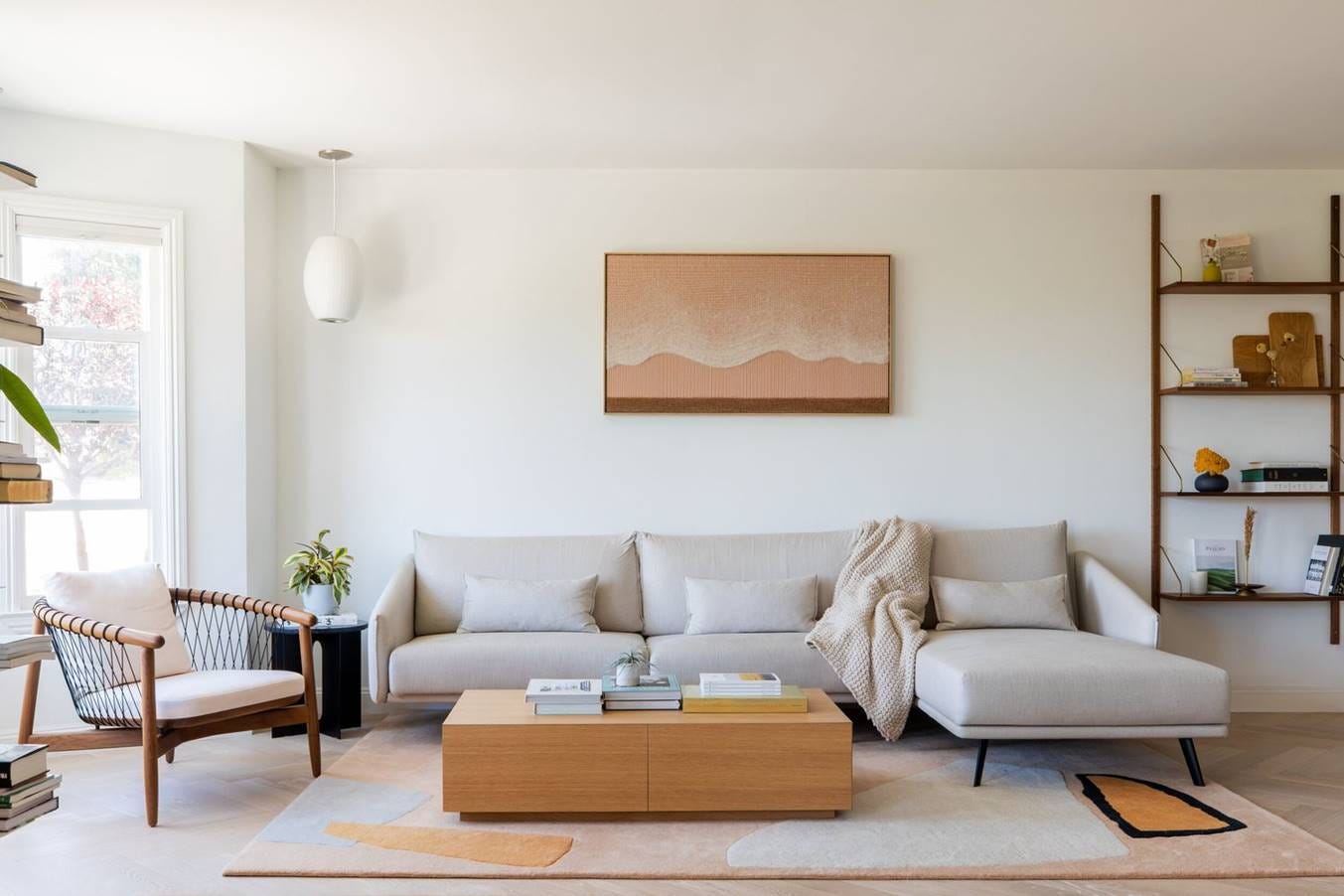
Having such a space feels like a blessing and comes with a duty to maintain. We must keep it clean, tidy, and return it to balance if disturbed.
Out shopping for simple items - cushions, a side table, even a mug to rest on one - just anything won’t do, it must fit. It’s easy to spot things that would jar or ruin the décor, in fact, over time, you’ve learnt to filter those out automatically, so they now barely register.
Your mind is helping you see the world through the eyes of the stylised room. Things that fit appear first and loudest, and the rest of reality fades into inattention.
The Unexpected Arrival
So what happens when a friend comes over with a gift for the room – an awkward offering, an unexpected arrival?
They place it down proudly:
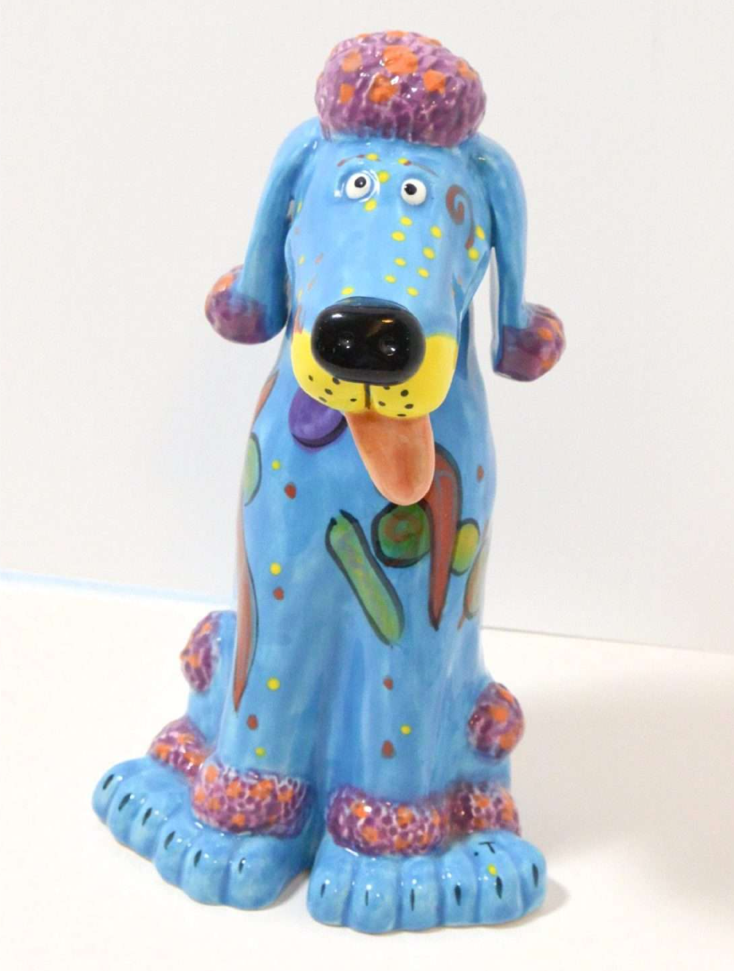
“This ceramic dog bank was designed in the bright and bold style of the 1960s, it’s not your standard poodle, it’s vintage!”
“Did you say dog bank?”
“Amazing right? You can put coins in it if you want to, and the artist has signed it”
“Well I never …” you murmur, only half-listening as you take in its blue face, yellow jowls, and tufts of purple hair. Its tongue is fully out and its eyes slightly crossed. A funny looking fella.
The impulse to reject
The cross-eyed monstrosity is clearly well-meant, valuable perhaps, adorable in its own way, but it doesn’t match our style at all. It clashes, it introduces tension and discomfort into our otherwise harmonious space. The emotional instruction is clear, reject. He’ll look better in the kitchen, in the shed, on eBay. Harmony restored. Gift declined.
But what if our poodle is truth, and the stylised room, our mind?
The stylised mind, like the room, instinctively protects coherence over conflict, harmony over truth. It moves quickly, often subconsciously, to preserve our inner décor.
When an unexpected gift arrives that challenges our design, we have two choices. We can remodel the room: a huge ask, an uncomfortable upheaval. Or...we try to shift the gift: cover it, move it, reject it.
The problem with truth is that it sticks around, even if masked or denied. Whether under a dust sheet, in another room, or staring glazen-eyed from a charity shop window, the Pooch remains.

It’s far easier to reject the item than remodel the room, and that’s the path we’ll take. But the choice is rigged. There is another way.
The Eclectic Room
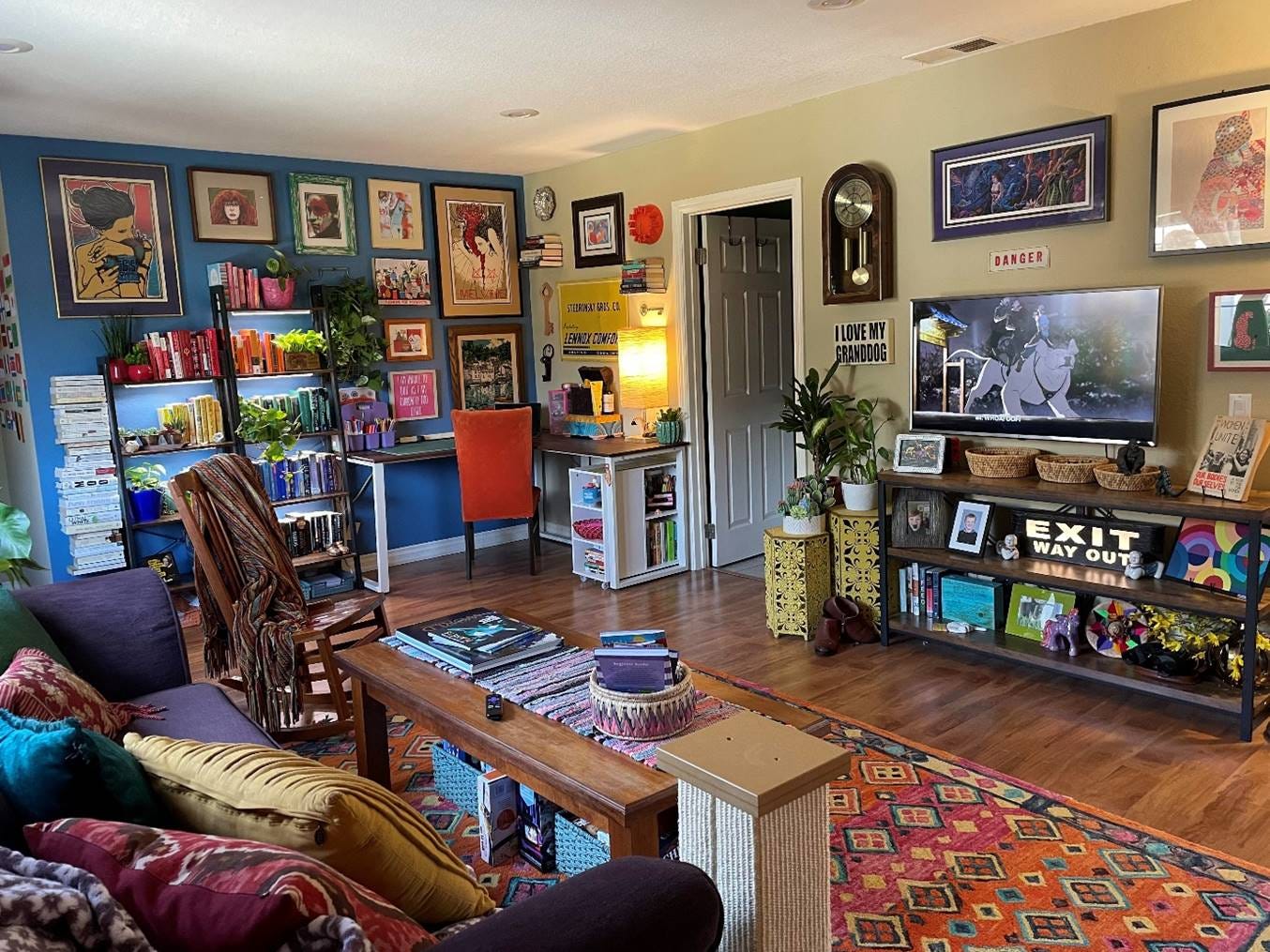
What if instead, we had cultivated an eclectic room, a mind with items from a range of styles and eras?
As well as natural whites, creams and woods, we also had artificially bright pinks and unnatural plastics. While some things were elegantly spaced, others were awkwardly cramped. Many items leant on each other under constant tension and uneasy dependence. Where there is pleasant light, there is also uneasy shadow.
This room is less ordered, but it is not chaos. It is still a room, curated by us.
And the eclectic room is adaptable. Things can be put in place for a time, tested, moved or swapped without threatening the overall design. And this includes our surprise arrival, the Poodle. The flexibility creates an ease of rearrangement, a space for contrast. So tension, contradiction and conflict feel less like threats and more like curiosities.
We also shop differently. We no longer scan the world for what best fits our style. Instead, we consider each item; pick it up, poke it, weigh it, before choosing shelf or home.
Conclusion
The stylised room offers comfort. It’s cohesive, curated, and filters the world with minimal effort. Discomfort is simply rejected. At its extreme, it barely notices alternatives, it seeks alignment, not disruption.
When the inner world feels chaotic, the outer one must be controlled. As Robin Skynner put it: “If people can't control their own emotions, then they have to start trying to control other people's behaviour.” The stylised room is the perfect stage for this. It simplifies, aligns, contains. It’s not just an aesthetic; it’s an emotional management system.
The eclectic room also has preferences, but not a singular style. It tolerates tension, contradiction, and change without losing its identity. A degree of inner order makes this possible. When the self feels secure, the surroundings don’t have to. Items can be swapped in or out without collapse, because meaning isn’t pinned to control, it’s carried within.
Both rooms accept and reject. But one avoids discomfort; the other works with it.
In one, novelty is experienced as threat and the discomfort (usually anxiety, resentment or guilt) cues us to restore order. In the other, novelty is experienced as curiosity, and the intrigue drives discovery.
The stylised room primes us to react - the instinct of all animals.
The eclectic room primes us to respond - the capacity of humans.
Which mind do you see more in the world? Which do you strive for?
After a long day, we all want to recline in the stylised room. But truth rarely lives in comfort. We must resist, and always be ready to entertain the unexpected arrival…
Coming soon
What’s the right amount of thinking – under thinking, over thinking, right thinking
Who is happier – puppy, child, adult, philosopher
Coaching as cards – how it works
How to talk about responsibility without blame
A Bigotry Buster – a checklist for modern times
Why conversations fail – getting the right tool for the job
What do you deserve – a self audit
Reframing the game – chess and wealth inequality
Massive hidden generosity – if tax were viewed as charity, or in cash terms only
An allegory on dogmatism as emotional management