Good Competition
The hidden half

It’s common sense that for someone to win, someone else must lose. And no one wants to be a loser. So maybe it’s harsh to put people in that position, and the kind thing to do is to lessen competition in society or avoid it. But as with most common sense, it is at least half wrong, and in important ways, profoundly damaging.
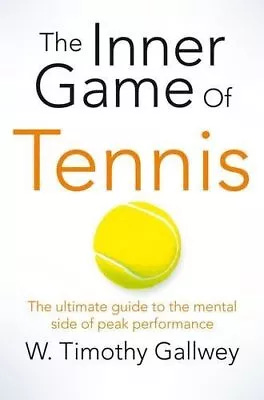
We do well to remember that competition can be mutually beneficial, resulting in a win-win. The difference is in how we frame the winning and the losing. Timothy Gallwey makes an elegant case in his 1974 book, “The Inner Game of Tennis: The ultimate guide to the mental side of peak performance”. Its subject is tennis, but its application is any aspect of life.
Two games
He explains. There are two games involved in tennis. One, the outer game, played against the obstacles presented by an external opponent and played for one or more external prizes. The other, the inner game, is played against internal mental and emotional obstacles for the reward of knowledge and expression of one's true potential.
Spectators watch the outer game, and seeing only that, may ridicule the superficiality of it all. But all that is valuable is not visible. If we rebalance the framing to include the inner-game, competition becomes an interesting device in which each player, by making his maximum effort to win, gives the other the opportunity he wishes to reach new levels of self-awareness.
In true competition no person is defeated. Both players benefit by their efforts to overcome the obstacles presented by the other. Both grow stronger and each takes part in the development of the other. The co-development is precious, rare and is felt as deep respect and admiration for your opponent – be it a person, event or part of nature.
Scale of the challenge
The value of competition, and some argue in life, is overcoming obstacles to reach a goal. And the value is only as great as the challenge overcome. That's why competition that is easy, or not close, is not rewarding - there is no challenge, although the outcome is externally the same, a win.
A large challenge can help a person explore their highest potential. It's only against the biggest challenges that you're required to use all your skill, courage, and concentration to overcome and test the true limits of your capacities.
Conclusion
When people talk only of winners and losers, they are talking of the outer game. Half the picture is missing. Remember the inner game. That competition is challenge, and challenge can be growth and self-realisation. Deny someone the ability to lose and you deny them this.
Read more…